
7 Reasons Artisan Craftsmanship Matters in Funeral Services

Last Updated: November 10, 2026
Quick Summary
Artisan craftsmanship shapes how a funeral feels, because a hand-built casket carries visible care in its grain, joints and finish. Families often notice this even when they cannot name why. For funeral homes and families alike, handcrafted pieces offer unique designs and personal choice.
Hand-built caskets show care in their grain, joints and finish.
Barnwood Casket caskets are handcrafted without power tools.
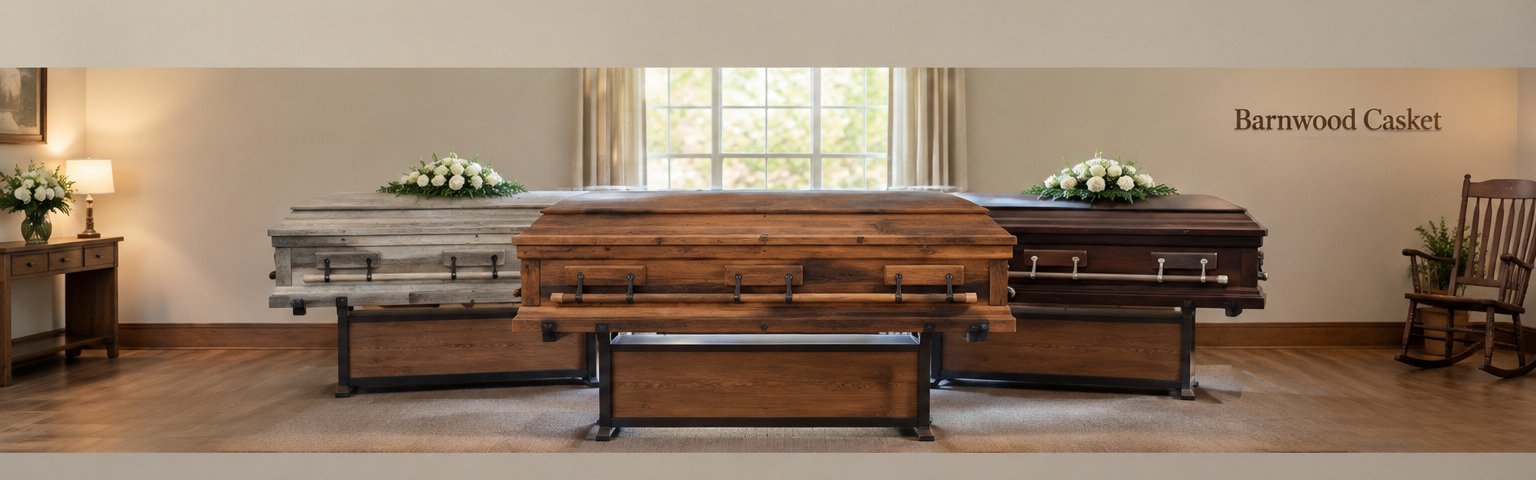
Barnwood Casket offers more than 70 different styles.
Barnwood Casket delivers using its own vehicles, including for last-minute orders.
Check wood species, joinery, finish and written total cost before ordering.
Table of Contents
Why Artisan Craftsmanship Shapes the Funeral Experience
Artisan craftsmanship changes how a funeral feels, and families notice it even when they can't name why. A casket built slowly by hand has a presence that a stamped, mass-produced box does not.
Funeral directors at independent homes already know that details matter. A family looks at the casket long before they look at the paperwork. When the wood is warm, the lines are clean and the finish is smooth, the room feels more settled.
Here is what artisan work usually brings to the table:
Unique pieces: Each casket can differ slightly in grain and finish.
Natural materials: Solid wood feels honest and familiar to many families.
Personal character: Craftsmen can shape a piece to suit a family's wishes.
Lasting quality: Careful joinery holds up better over time than fast assembly.
Families are often stressed about costs and choices. A piece that looks and feels carefully made can give them a sense of care at a difficult moment.
How Craftsmanship Connects to Funeral Traditions and Heritage
Funeral customs differ widely across families, faiths and regions. Many traditions treat the casket as a final act of respect. Craftsmanship sits at the center of that respect, because a hand-built piece carries the time and attention someone put into it.
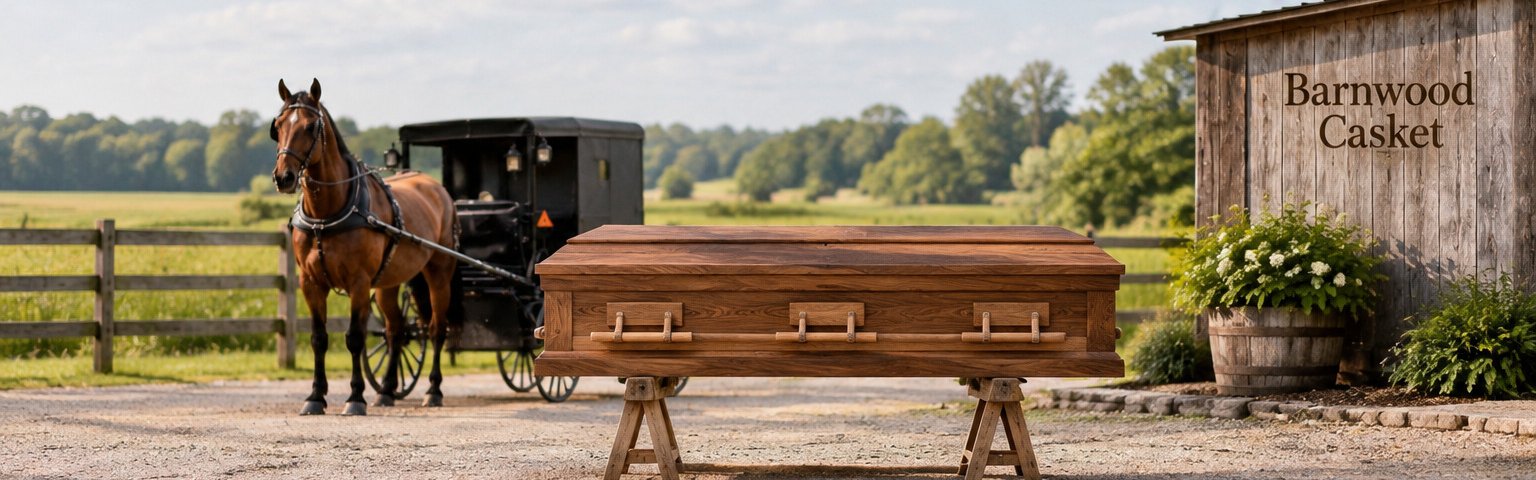
Many families want their loved one to be remembered in a way that fits their heritage. Simple wood, plain lines and natural finishes suit many rural and faith-based traditions. Barnwood Casket's pieces are handcrafted by Amish craftsmen.
Funeral directors serving diverse communities can use this to guide conversations. Ask the family what the service should feel like. A rustic walnut casket may suit one family. A cherry piece with a soft interior may suit another.
Handcrafted Caskets: What Separates Them From Mass-Produced Options
Handcrafted caskets differ from mass-produced ones in a few clear ways. The biggest difference is how they are made. Barnwood Casket's craftsmen build most pieces without power tools.

Mass-produced caskets are built for speed and uniformity. That works well for some funeral homes. Handcrafted caskets suit homes that want something their families will not see anywhere else. Barnwood Casket offers one-of-a-kind, limited-edition designs and more than 70 different styles.
Here is how the two compare at a glance:
Feature | Handcrafted (Barnwood Casket) | Mass-Produced |
How it is made | Mostly by hand, no power tools | Machine-made in batches |
Design | Limited runs or one-of-a-kind | Standard, repeated designs |
Wood options | Mahogany, walnut, cherry, oak | Often limited |
Best for | Families wanting something unique | Fast, uniform stock |
Materials, Joinery, and Finishing
The wood, the joints and the finish all shape how a casket looks and holds up. Barnwood Casket works with a range of woods, including mahogany, walnut, cherry and oak.
When you compare options, look closely at these details:
Wood type: Ask which species is used and how it looks in person.
Joinery: Ask how the pieces are fitted together.
Finish: Check for an even, smooth surface with no rough patches.
Personalized Funeral Products That Reflect a Life
Personalization helps a family feel that the service is about their loved one, not a generic box. Handcrafted pieces give families more room to choose, because each design can be selected to fit the person being honored.
Barnwood Casket offers caskets, cremation urns and rockers, with more than 70 different styles to choose from. For funeral directors, offering choice is a way to set their home apart.
Personal touches can be simple. A certain wood tone might match a family's favorite furniture. A plain style might suit someone who lived a quiet life. Ask the family what their loved one enjoyed, then help them find a piece that reflects it.
Evaluating Artisan-Made Funeral Goods: A Practical Checklist
Most articles on funeral craftsmanship stay at the level of appreciation, they describe why handmade pieces feel meaningful but never explain how to tell a well-made piece from a poorly made one. That is the gap this section fills. Whether you are a funeral director stocking a selection room or a family choosing a single casket, the same five questions separate a piece that will hold up and feel right from one that only looks the part in a photograph.
1. Materials: species, grade, and moisture
Ask which wood species is used and why.
2. Joinery: how the box is held together
Ask directly how the pieces are fitted together. A maker who builds without power tools will usually be glad to explain the joints, because the joinery is the point.
3. Finish: surface, edges, and interior
A good finish is even in color and smooth to the touch, with no rough patches, drips or sanding marks. Check the edges and the interior as carefully as the lid, those are the areas rushed work skips. The interior matters for a different reason: lining and bedding should be cleanly fitted, with no loose staples or uneven seams. Watch out: a high-gloss finish can hide shallow sanding, so ask whether the piece was sanded between coats.
4. Provenance and maker accountability
Ask who made the piece and where. A named workshop with a consistent method is easier to hold accountable than an anonymous supply chain. Ask what happens if something arrives damaged or does not match what was described. A supplier who stands behind the product will answer that question without hesitation.
5. Suitability: requirements, timing, and budget fit
Workmanship means nothing if the piece does not fit the service. Confirm cemetery or crematory requirements, transport and handling needs, and the delivery date before you commit. Cost matters to both funeral homes and families, so ask for a written quote that states the total.
A quick inspection checklist
Wood species, grade and drying method clearly stated
Joints tight and fitted, with no filler or staples carrying the load
Finish even on the lid, edges and interior
Lining and bedding cleanly fitted
Maker named and willing to stand behind the piece
Cemetery, crematory and transport requirements confirmed
Delivery date and total cost confirmed in writing before ordering
Pricing depends on the piece, the options and the delivery details, so contact Barnwood Casket directly for a current quote and to confirm terms.
Casket Delivery Time for Funeral Homes and Last-Minute Orders
Delivery time is often critical. A funeral home may need a casket within a day or two, and a delay can disrupt the whole service. Barnwood Casket offers timely service for last-minute emergencies and delivers using its own vehicles. Read same day casket delivery options for urgent needs.
Plan ahead where you can. Keep a few styles in mind for common needs, and talk with your supplier about lead times. For urgent calls, tell the supplier the service date and location as early as possible so they can plan the delivery.
Clear communication helps prevent problems. Confirm the delivery address, the time window and who will receive the casket. Ask how the supplier handles changes if the family's plans shift.
Planning Your Next Handcrafted Casket Order
Competitors describe handcrafted caskets but rarely explain how an order actually comes together. This section walks through the sequence from first conversation to delivery, with the roles of the family, the funeral director and the craftsman spelled out at each step. The order below works for a funeral home planning ahead and for a family choosing a single piece.
Step 1: Establish the service requirements first
Before choosing a style, confirm what the service requires. Ask the cemetery or crematory about any restrictions on materials or construction, confirm the transport and handling needs, and set the service date. These constraints narrow the options faster than any catalog. A funeral director can usually supply this information in one conversation; a family working without a director should ask the cemetery directly.
Step 2: Translate the family's wishes into a short list
Ask the family what the service should feel like and what the loved one was like. Then narrow to two or three styles and woods rather than presenting the full range. A quiet, plain piece in a warm wood suits one family; a more detailed design in a darker wood suits another. Keep the short list small so the decision stays manageable during a stressful period.
Step 3: Brief the craftsman with specifics
A good brief includes the wood species, the style, any personalization, the service date and the delivery location. Vague requests produce revisions; specific ones produce a piece that matches expectations the first time.
Step 4: Review proofs and confirm details in writing
Ask for a written confirmation of the wood, style, personalization, delivery date and total cost before the piece is built. Watch out: verbal agreements about wood species or delivery dates are the most common source of disappointment, so put every change in writing and keep a copy.
Step 5: Lock the delivery plan
Confirm the delivery address, the time window and who will receive the piece. Delivery time is often critical, so raise urgent needs as early as possible and give the supplier the service date and location up front.
Step 6: Coordinate the handoff with the funeral director
If a funeral director is involved, confirm who is responsible for receiving the casket, inspecting it on arrival and staging it for the service. A short handoff conversation prevents the piece from arriving at the wrong door or at the wrong time. For families ordering directly, confirm the same details with the supplier and the cemetery.
Roles at a glance
Step | Family | Funeral director | Craftsman |
Requirements | States wishes and budget | Confirms cemetery and transport rules | Advises on suitable options |
Short list | Chooses from two or three options | Guides the conversation | Provides accurate descriptions |
Brief | Describes personalization | Confirms service details | Confirms feasibility |
Proofs | Reviews and approves | Reviews for service fit | Produces the piece |
Delivery | Receives or delegates | Receives and stages | Delivers on schedule |
Barnwood Casket's pieces are handcrafted without power tools, it offers more than 70 styles, and it delivers using its own vehicles. For a current quote and to set up an appointment or delivery, contact Barnwood Casket directly. For a current quote and to set up an appointment or delivery, contact Barnwood Casket through its website at www.barnwoodcasket.com.
Frequently Asked Questions
Why does craftsmanship matter when choosing a casket?
Craftsmanship affects how a casket looks, how it is finished, and how well its joints and panels hold together over time. For a funeral home, it also shapes how a family perceives the care taken with their loved one. Handcrafted pieces are often built slowly with hand tools, which allows closer attention to grain, fit, and finish than high-volume production usually permits. Funeral directors can ask suppliers to describe their construction methods, wood types, and finishing steps so they can compare options on substance rather than appearance alone.
What is the difference between a handcrafted casket and a mass-produced casket?
A handcrafted casket is typically built by a small team of craftspeople who work with each piece individually, often using traditional woodworking methods. Mass-produced caskets are made in larger runs with more standardized components and processes. Handcrafted pieces tend to offer more variety in wood species, design, and finishing, while mass-produced options are usually more uniform. Funeral directors should confirm construction details, lead times, and warranty terms with any supplier before placing an order.
How can funeral homes manage handcrafted casket inventory and delivery expectations?
Confirming delivery windows before a family call, and asking suppliers about emergency order handling, helps reduce surprises. Pricing depends on quantity, dates, and delivery, so request a current quote from Barnwood Casket on its website. Clear communication with the supplier about what is in stock and what requires production time makes planning more predictable.
Can artisan craftsmanship reflect a loved one's personality or values?
Artisan work can reflect personal meaning through wood selection, design choices, and finishing details. Families may favor a particular wood tone, a simple profile, or a finish that echoes the character of the person being remembered. Funeral directors can help families talk through these preferences and identify which options fit within the available styles and any customization limits the supplier sets.

Comments