
Outstanding Products at a Fair Price for Funeral Homes

Quick Summary
Funeral homes find outstanding products at a fair price by weighing quality, construction and delivery reliability together rather than comparing sticker prices alone. Handcrafted caskets offer fitted joinery and a personal finish, and suppliers should provide itemized quotes covering delivery and any extras.
Ask every supplier for an itemized quote showing delivery and any custom or rush charges.
Inspect joints, lid fit, finish and handle anchoring before judging a casket's quality.
Choose hardwoods like mahogany, walnut, cherry or oak for better durability in storage and transit.
Keep a small inventory of popular styles to cover urgent calls.
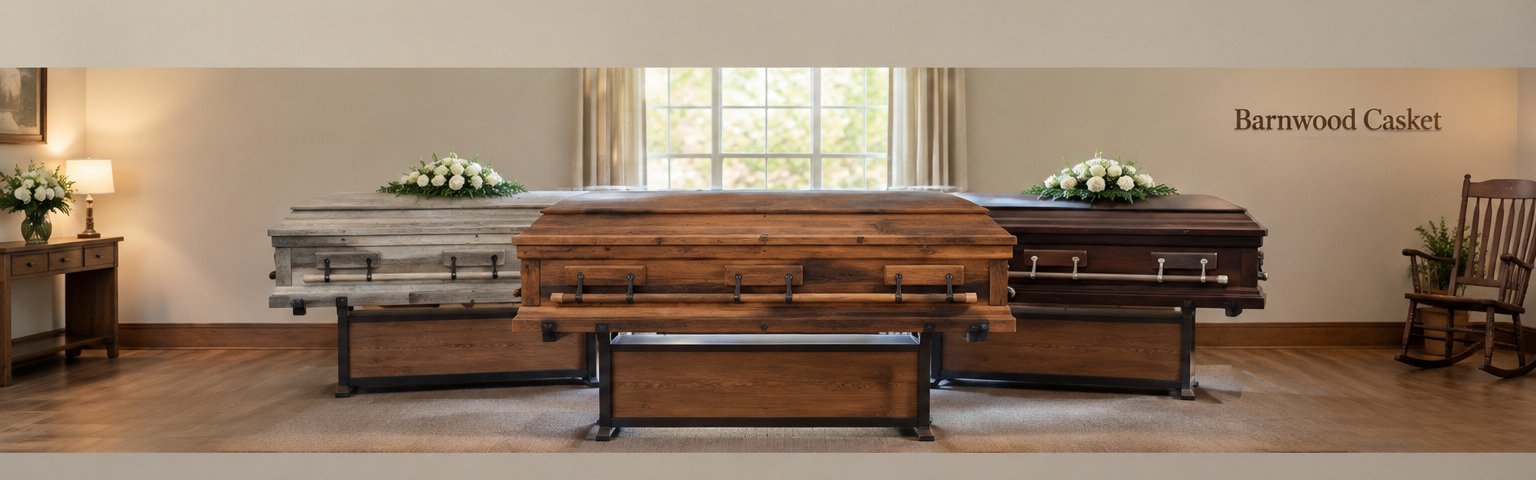
Barnwood Caskets are handcrafted by Amish craftsmen without power tools, with more than 70 styles available.
Table of Contents
Why Funeral Homes Look for Outstanding Products at a Fair Price
Independent funeral homeowners face a steady squeeze. Families are already stretched when they arrive, and the funeral home has to deliver quality, dignity and a sensible bottom line at the same time. Finding suppliers who can meet all three is harder than it looks.
This is where Barnwood Casket fits in. Our customers are mostly independent, family-owned funeral homes, along with families looking for something unique to honor a loved one. Both groups tell us the same two things matter most: cost and delivery time. We built our approach around both.
A funeral home rarely plans a service on a schedule it controls. A call can come on a Friday afternoon for a Monday service, and the casket needs to be right when it arrives. Speed matters as much as price, so a supplier that cannot deliver reliably creates real problems, whatever the product looks like.
Price matters too, but a low number alone does not tell you much. The useful question is what you get for the money, including finish, construction, and whether the piece will hold up for the family.
What Separates a Quality Casket From a Mass-Produced One
Mass-produced caskets are built for volume. Parts are cut, assembled and finished along a line, which keeps costs down but limits how much attention any single piece receives. Many funeral directors find these caskets perfectly serviceable, though they often look and feel much the same from one order to the next. For affordable options suited to pre-need and inventory planning, see affordable caskets for pre-need planning.
Handcrafted caskets take a different path. A craftsman works with one piece of wood at a time, reads the grain, and shapes each joint and panel by hand. The result is a casket with its own character, which is why many families pick a handcrafted option when they want something that feels personal. To see why funeral directors favor handcrafted wood options, read why funeral directors prefer handcrafted wood caskets.
The difference is easiest to see in how the box is put together, not in the brochure. A casket has to hold a body through transfer, viewing, and committal, so the joints, the lid, and the hardware carry real load. Mass-produced units typically rely on dowels, staples, and mechanical fasteners set by jigs, which is fast and consistent. Handcrafted units usually depend on fitted joinery and glue surfaces that a craftsman can inspect and adjust piece by piece. Neither approach is automatically better, but the handcrafted method gives a buyer more to evaluate.
When you compare products, look for these signs of quality:
Wood selection: Hardwoods such as mahogany, walnut, cherry and oak hold their shape and finish well. Softer woods can be perfectly appropriate for a simple design, but they dent and mark more easily in transit.
Joinery: Tight, well-fitted joints usually signal careful construction. Run a finger along an inside corner; a joint that catches or shows a gap will likely open further with handling.
Lid and panel fit: The lid should sit flush without rocking, and side panels should feel solid when pressed. A lid that shifts suggests the frame is not square.
Finish: An even finish with no rough patches, drips, or sanding swirls shows attention to detail. Check the underside and the inside of the handles, where shortcuts usually show.
Hardware: Handles and fittings should feel solid and sit flush. Ask how the handles are anchored, because a handle that pulls loose under load is a safety and dignity problem at the worst possible moment.
Interior: Look at how the lining is attached. Staples that are visible or lining that puckers will not improve with age.
Durability expectations matter too, especially for funeral homes that store a small inventory. A casket that sits in a garage or stockroom for weeks before use is exposed to humidity and temperature swings. Solid hardwood and stable joinery tolerate that better than particleboard cores or thin veneers, which can swell, lift, or delaminate. Most practitioners find that the failure points show up first at the lid hinge, the handle mounts, and the bottom board, so those are the places to inspect on any sample.
Our caskets are handcrafted by Amish craftsmen, and all Barnwood Caskets are made without power tools.
Evaluating Handcrafted Caskets for Your Families
We have more than 70 different styles to choose from.

A simple way to evaluate a handcrafted casket is to ask three questions:
Does the wood and finish match what the family expects?
Is the construction solid enough to handle transport and viewing?
Can the supplier deliver on the timeline the service requires?
Pricing depends on the style, wood, quantity and delivery details, so we recommend requesting a current quote from Barnwood Casket instead of relying on general figures.
Choosing Among Funeral Product Suppliers
Most funeral homes already work with several suppliers. Adding a new one takes time, so the decision should be deliberate. The FTC's Funeral Rule requires funeral homes to provide price information, and a clear product price list helps you compare suppliers on equal terms. The same discipline works on the supply side: ask every supplier for the same information in the same format, then compare line by line.
A practical comparison framework covers five areas:
Product range and style depth: Does the catalog cover the styles your families actually ask for? A supplier with a deep catalog is more likely to have the right piece on short notice, while a narrow catalog may force substitutions at the worst time.
Quality and construction: Ask what the casket is made of, how the joints and handles are built, and what the finish is. A supplier who can answer in specifics is easier to trust than one who answers in adjectives.
Fulfillment and delivery: Ask how the supplier ships, who controls the schedule, and what happens when a service is moved up.
Guarantees and returns: What happens if a casket arrives damaged or does not match the description?
Service and support: Who answers the phone on a Friday afternoon, and how quickly? For urgent calls, reachability matters as much as the product.
Buyer type changes the priorities. Independent funeral homeowners usually need a reliable supply partner: consistent quality, predictable turnaround, and a catalog broad enough to serve many families. Consumers seeking something unique for a loved one usually need guidance more than volume: help choosing a style, a clear explanation of what is included, and a realistic delivery date. A supplier worth keeping can serve both without treating either as an afterthought.
Watch out: a low quoted price can hide charges for delivery, custom requests, or rush handling, so ask for an itemized quote that lists every charge before you compare suppliers on cost.
Barnwood Casket is available through licensed professional funeral directors. With more than 70 styles and delivery in our own vehicles, we can give funeral homes and families a clear answer on both product and timing.
Here is how the five comparison areas stack up when you evaluate a supplier:
Area | What to ask | Why it matters |
Product range and style depth | Does the catalog cover the styles families request? | A deep catalog avoids substitutions on short notice |
Quality and construction | What materials, joints, handles and finish are used? | Specific answers are easier to trust than adjectives |
Fulfillment and delivery | How does the supplier ship and handle moved-up services? | Services cannot wait for late delivery |
Guarantees and returns | What happens if a casket arrives damaged or mismatched? | Protects against costly surprises |
Service and support | Who answers the phone on a Friday afternoon? | Urgent calls need reachable staff |
Planning Around Casket Delivery Time
Delivery time is one of the most important factors for funeral homes, because services cannot wait. A supplier that promises quick turnaround is only useful if it keeps that promise. Read what realistic casket delivery timelines look like for funeral homes to plan around them.
Delivery is made using our own vehicles.
Some practical tips for planning around delivery:
Keep a small inventory of popular styles for emergency needs.
Ask suppliers for a realistic turnaround estimate before you need one.
Build a relationship with a supplier before an emergency arises.
Planning ahead is always easier than scrambling on a Friday afternoon. Delivery time is critical to our customers, and we treat timely delivery for urgent orders as a priority.
Using the FTC Funeral Rule General Price List to Compare Costs
The FTC Funeral Rule requires funeral providers to give consumers a General Price List (GPL) that itemizes their goods and services. Funeral homes use this list to show families what each item costs, so families can choose only what they want.
For funeral home buyers, the same principle applies when comparing suppliers. Ask each supplier for itemized pricing that shows the casket, the style, any upgrades and the delivery charges. An itemized quote makes it easier to compare options fairly and avoids surprise add-on fees.
When you compare, check whether the price includes delivery, whether there are charges for custom requests, and how long the quote remains valid. These details often matter more than the headline price.
Requesting a Quote for Your Next Order
The best next step is to request a quote tailored to your needs. Tell us the styles your families typically request, your typical order volume, and your delivery timing. We will provide pricing based on those details. Before you sign, check what a casket supplier guarantee should cover for quality, delivery and defects.
Barnwood Casket is ready to help your funeral home find quality handcrafted caskets at a fair price, with delivery time treated as critical. Contact us today to request a quote or to discuss samples for your next order.
Frequently Asked Questions
What should funeral directors look for in a casket supplier?
Look for consistent build quality, clear product descriptions, a documented delivery process, and a straightforward policy for damaged or unsatisfactory items. Ask suppliers how they handle last-minute orders and whether they ship in their own vehicles or through third-party carriers. Request references from other funeral homes that have used the supplier over multiple seasons. Compare wood species, finish, and construction details side by side, and confirm that pricing is stated in writing before you commit to an order.
How long does it take to receive a handcrafted casket?
Delivery time for a handcrafted casket depends on the style, wood selection, quantity, and shipping distance. Barnwood Casket treats timely delivery as a priority, especially for emergency orders, but exact timing for a specific order should be confirmed directly with the company. Funeral directors placing urgent orders should ask about current lead times at the time of the request and build that window into their service planning.
What information should a funeral home include in its General Price List?
The FTC Funeral Rule requires funeral providers to give consumers a General Price List that itemizes the goods and services they offer, so families can compare costs without pressure. Caskets and burial containers should be listed with their individual prices, and the list should be updated when your supplier costs change. Keeping the list current and easy to read helps families make informed decisions and reduces the risk of misunderstandings during arrangements.
Can families choose a handcrafted casket for a loved one?
Yes. Families who want a unique, natural-material memorial can select a handcrafted casket through a licensed professional funeral director. Barnwood Casket offers more than 70 styles across several wood types, including mahogany, walnut, cherry, and oak, and all Barnwood Caskets are crafted without power tools. Families should speak with their funeral director about which styles and woods fit their preferences and budget, and about current pricing, which depends on the selection and order details.


Comments