
Why Funeral Directors Prefer Handcrafted Wood Caskets

Last Updated: November 8, 2026
Quick Summary
Funeral directors favor handcrafted wood caskets because they offer natural materials like mahogany, walnut, cherry, and oak, plus one-of-a-kind designs. Families also value them as a personal choice. Independent funeral homes weigh quality, cost, and fast, dependable delivery when choosing a supplier.
Funeral directors choose suppliers based on quality, cost, and speed.
Handcrafted caskets use natural materials like mahogany, walnut, cherry, and oak.
Barnwood Casket builds its caskets by hand, with most made without power tools.
Barnwood Casket offers more than 70 styles and delivers using its own vehicles.
Confirm delivery timelines and rush-order steps with your supplier before placing an urgent order.
Need a casket fast?
Barnwood Casket offers 70+ handcrafted styles with delivery by our own vehicles.
Table of Contents
What Funeral Directors Look for in a Casket Supplier
Funeral directors choose a casket supplier for three reasons above all: quality, cost, and speed. Our customers are mostly independent, family-owned funeral homes, and they know that a casket is often the first thing a family sees. Get that wrong and the whole service suffers.
Cost matters to funeral homes and to the families they serve. Many families already feel stretched by funeral expenses, so a supplier that offers real value at a fair price helps everyone at the table.
Delivery time is just as critical. When a family calls on a Friday for a Monday service, the funeral home needs a supplier that can respond quickly. A reliable supplier makes that possible.
Look for these qualities when you compare suppliers:
Consistent quality that holds up from one order to the next
A fair price that works for both the funeral home and the family
Fast, dependable delivery, especially for urgent needs
Many styles so families can find the right fit
Clear communication from the first call through delivery
Why Handcrafted Wood Caskets Stand Out From Mass-Produced Options
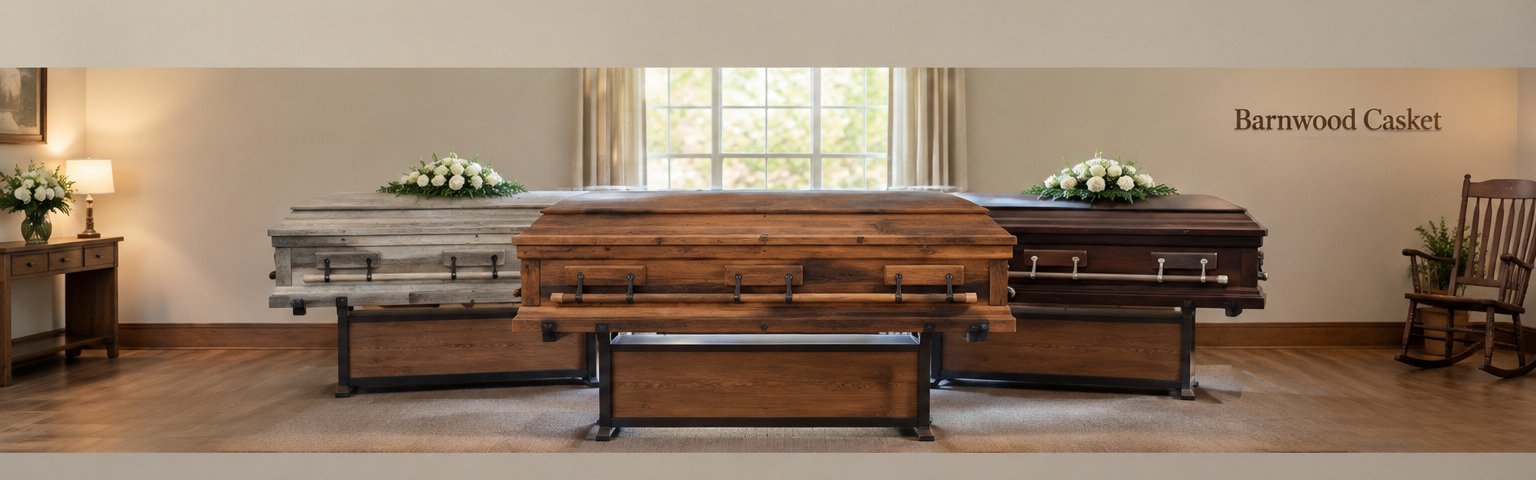
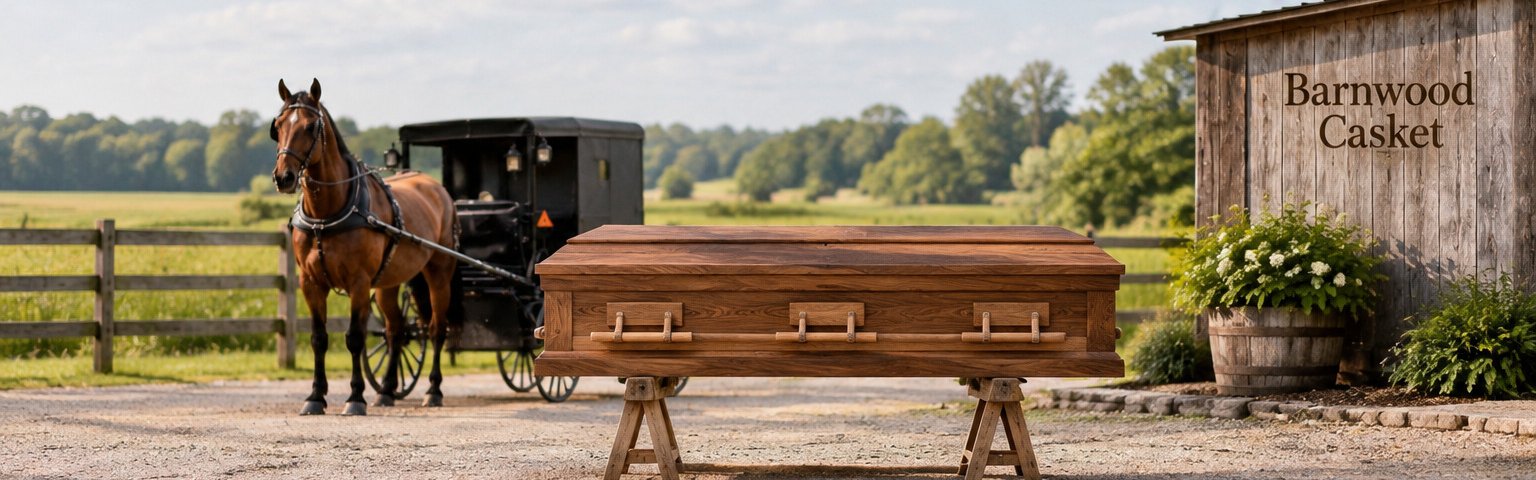
Handcrafted wood caskets look and feel different from mass-produced models. At Barnwood Casket, our pieces are built by Amish craftsmen, and most are made without power tools.

Handcrafted caskets are built for a more personal result, which matters to families who want something individual.
Here is what sets handcrafted wood apart:
Natural materials like mahogany, walnut, cherry, and oak
One-of-a-kind pieces and limited-edition designs
A personal option for families who want something unique
Funeral Home Casket Inventory Management Without Overstocking
Keeping too many caskets on hand ties up cash. Keeping too few leaves you short when a call comes in. The goal is to carry enough stock to serve families well without paying to store pieces you rarely sell. Most independent funeral homes find the right balance by treating casket inventory like any other operational system: measure it, set rules, and review the numbers on a schedule.
Start with a 12-month sales review
Pull your last 12 months of casket sales and sort them by style, material, size, and price tier. Note three things for each piece: how many you sold, how often you ran low, and how long each unit sat before it sold. Patterns show up quickly. A handful of styles usually account for most sales, while a long tail of slow movers eats up floor space and cash.
Calculate a simple reorder point
A reorder point tells you when to order before you run out. The basic formula is:
Reorder point = (average weekly sales × lead time in weeks) + safety stock
For example, if a style sells about two units per week, your supplier's lead time is one week, and you want one week of safety stock, your reorder point is (2 × 1) + 2 = 4 units. When stock drops to four, you reorder. Adjust safety stock upward for styles with unreliable lead times or seasonal demand spikes, such as during periods when death rates historically rise.
Track a small set of casket-specific KPIs
You do not need a dashboard to run a tight inventory. Four numbers, reviewed monthly, will tell you most of what you need:
Inventory turnover, cost of caskets sold divided by average casket inventory value. Higher turnover generally means cash is not sitting on the floor.
Days on hand, average inventory divided by average daily sales. This shows how long a typical casket sits before it sells.
Stockout rate, the percentage of requests you could not fill from stock. A rising rate means your reorder points are too low.
Aging stock, pieces on hand longer than 90 or 180 days. These are candidates for display rotation, discounting, or return.
Set simple rules for your inventory
Keep a small core of your best-selling styles in stock, sized to your reorder points
Order slower-moving styles only when a family asks for them
Count your stock every month and record what you have
Reorder before you hit your minimum, not after
Review aging stock quarterly and decide whether to keep, rotate, or retire each piece
A basic count helps more than most people expect. Write down each casket's style, size, and location. Update the list when pieces arrive or leave. This small habit prevents surprises and makes month-end reconciliation far easier.
Use delivery speed to carry less
Many funeral homes find that a supplier who can deliver quickly lets them carry less stock. When you can get a casket in a short time, you do not need to hold every style on your shelves. Barnwood Casket delivers using our own vehicles.
Watch out: if you cut stock without confirming your supplier's real lead time, a single busy week can leave you without a casket for a family that needs one tomorrow.
Casket Delivery Time for Funeral Homes in Urgent Situations
Urgent casket orders are a normal part of funeral work. A death does not follow a schedule, and families often need a casket within a day or two. Your supplier needs to handle that pressure.
Before you place an urgent order, confirm three things with your supplier: the delivery timeline, the process for a rush request, and what happens if the piece needs changes. Clear answers now save stress later.
Barnwood Casket delivers using our own vehicles, which gives funeral homes more control over timing than relying on outside carriers.
If you are unsure which styles can ship quickly, ask. Some pieces are easier to move on short notice than others, and knowing that in advance helps you plan.
Here is what to confirm with a supplier before placing an urgent casket order.
Check | What to confirm | Why it matters |
Delivery timeline | Expected arrival for a rush order | Families often need a casket within a day or two |
Rush process | How the supplier handles urgent requests | Clear steps prevent delays |
Style readiness | Which styles can ship quickly | Some pieces are easier to move on short notice |
Changes | What happens if the piece needs adjustments | Avoids surprises close to the service |
Delivery method | Whether the supplier uses its own vehicles | Gives funeral homes more control over timing |
Casket Inventory Checklist for Receiving and Storing Stock
Receiving a casket is only half the job. Checking it properly, documenting what arrived, and storing it well protects both the product and your business. Most inventory problems start at the receiving dock, not on the showroom floor, so a consistent procedure pays for itself.
Receiving checklist
Use this checklist each time a delivery arrives:
Compare the delivered style, size, and finish to your purchase order
Inspect the exterior for scratches, dents, or cracks
Check the interior lining and hardware for damage
Confirm handles, latches, and fittings are secure
Photograph any damage before signing the delivery paperwork
Record the piece in your inventory list with its location
Note the delivery date and the name of the person who received it
Handling damage and discrepancies
Damage and short shipments happen. What matters is how quickly you document them. If a casket arrives damaged, photograph it from multiple angles, note the damage on the delivery paperwork before signing, and contact the supplier the same day. Keep the packaging until the issue is resolved.
If the wrong style or size arrives, treat it the same way: document it, notify the supplier, and hold the piece in a clearly labeled area so it is not accidentally sold or used. Reconcile the supplier invoice against what actually arrived before you approve payment. A three-way match between purchase order, delivery receipt, and invoice catches most billing errors.
Storing caskets safely
Store caskets in a clean, dry area where they will not be bumped or scratched. Keep each piece protected and clearly labeled so staff can find it fast when a call comes in. Avoid stacking caskets directly on top of one another unless the manufacturer's packaging is designed for it. Keep the storage area away from moisture and direct sunlight, both of which can affect wood finishes over time.
Keeping records that hold up
Good records make audits and reorders easier. If a problem shows up later, your photos and notes will show what condition the casket was in when it arrived. Keep receiving records for as long as your state's recordkeeping requirements for funeral merchandise require, and store them where you can retrieve them quickly if a family or regulator asks questions.
Watch out: signing for a delivery without inspecting the casket first can shift responsibility for damage onto your funeral home, so build the inspection into your receiving routine rather than treating it as optional.
Questions to Ask a Casket Supplier Before You Place an Order
A few direct questions can reveal a lot about a supplier. Ask these before you commit to a first order:
How long have you been in business, and who builds the caskets?
What is your typical delivery time, and how do you handle urgent orders?
Do you deliver directly, and what does shipping cost for my location?
What happens if a casket arrives damaged or does not meet expectations?
Can you build custom requests, such as a specific wood or design?
Can you provide references from other funeral homes?
Ask for answers in writing when you can. A supplier that stands behind its work will be glad to put its promises on paper.
Booking Your First Handcrafted Casket Order With Barnwood Casket
Ready to see how handcrafted caskets can fit your funeral home? We carry more than 70 styles, and we can talk through what fits your families and your budget.
Contact Barnwood Casket or visit www.barnwoodcasket.com to set up an appointment or arrange your first delivery. Tell us about your needs, and we will walk you through the options and timing for your order.
Frequently Asked Questions
Why do some funeral directors prefer handcrafted wood caskets?
Many independent funeral directors value handcrafted wood caskets because each piece is built individually, giving families a distinct product rather than an identical stock item. Barnwood Casket's pieces are made by Amish craftsmen using a range of woods such as mahogany, walnut, cherry, and oak, and many are finished without power tools. Funeral directors also point to the natural material and the ability to offer families a personal choice. Current pricing depends on the style, quantity, and delivery details, so contact Barnwood Casket directly or visit the website for a quote.
How long does it take to deliver a handcrafted wood casket?
Delivery time depends on the style selected, the order quantity, and the destination. Barnwood Casket uses its own vehicles for delivery and offers timely service for last-minute emergencies, but exact timing should be confirmed when you place an order. Funeral homes planning ahead for pre-need or known services can usually secure a firmer schedule than those ordering on short notice. Contact Barnwood Casket to confirm availability and delivery timing for your specific location and need.
What types of wood are used to make caskets?
Barnwood Casket works with a variety of woods, including mahogany, walnut, cherry, and oak. Each wood has a different grain, color, and feel, so the choice often comes down to the family's preferences and the look the funeral home wants to present. With more than 70 styles available, funeral directors can match a casket to a wide range of tastes. Ask Barnwood Casket for current wood options and style details when requesting a quote.
How can funeral homes reduce the risk of casket inventory damage?
Store caskets in a clean, dry location where they cannot be bumped or stacked unevenly, and inspect each piece on arrival for scratches, dents, or finish problems. Record any damage at receiving with photos and notes so claims can be handled quickly. Clear labeling and a defined storage spot for each style also reduce handling. Review your supplier's policy on damaged or non-matching pieces before you place an order, so you know your options if a casket does not meet expectations.

Comments