
Amish Made Casket Benefits: A Guide for Funeral Directors

Table of Contents
Why Amish Made Casket Benefits Matter to Funeral Directors
Craftsmanship Behind Every Amish Made Casket
Hand Tools, Hand Skills, and What That Means for Quality
What the Amish Funeral Tradition Teaches About Simplicity
Wood Casket Materials: Mahogany, Walnut, Cherry, and Oak
Custom Wooden Caskets: What Families Can Request
Wood Casket Cost: What Drives the Price
Choosing a Wooden Casket: A Framework for Funeral Directors
What to Watch For Before You Commit
Conclusion
Frequently Asked Questions
Last Updated: October 14, 2026
Why Amish Made Casket Benefits Matter to Funeral Directors
Amish made casket benefits come down to one thing: a family notices the difference the moment they walk into the arrangement room. At Barnwood Casket, we have supplied handcrafted wooden caskets to licensed professional funeral directors since 2010, and the pattern repeats. Families who expected a mass-produced box stop at the grain, the joinery, the finish. The casket becomes part of the service rather than an invoice line.
That reaction matters commercially. A casket that photographs well, sits level, and carries a story gives a director something to talk about besides price. The Federal Trade Commission's Funeral Rule requires that you give families an itemized price list and let them choose item by item, which means the casket decision is genuinely theirs. When a handcrafted option sits on that list, more families choose it than directors expect. Below, we break down the craftsmanship, the wood casket materials, the customization options, and the practical questions to settle before you commit to a supplier.
Key Takeaway Handcrafted caskets do not sell themselves on nostalgia. They sell because a family can see and touch the difference during the arrangement conference, and because the story behind the piece gives the service meaning.
Craftsmanship Behind Every Amish Made Casket
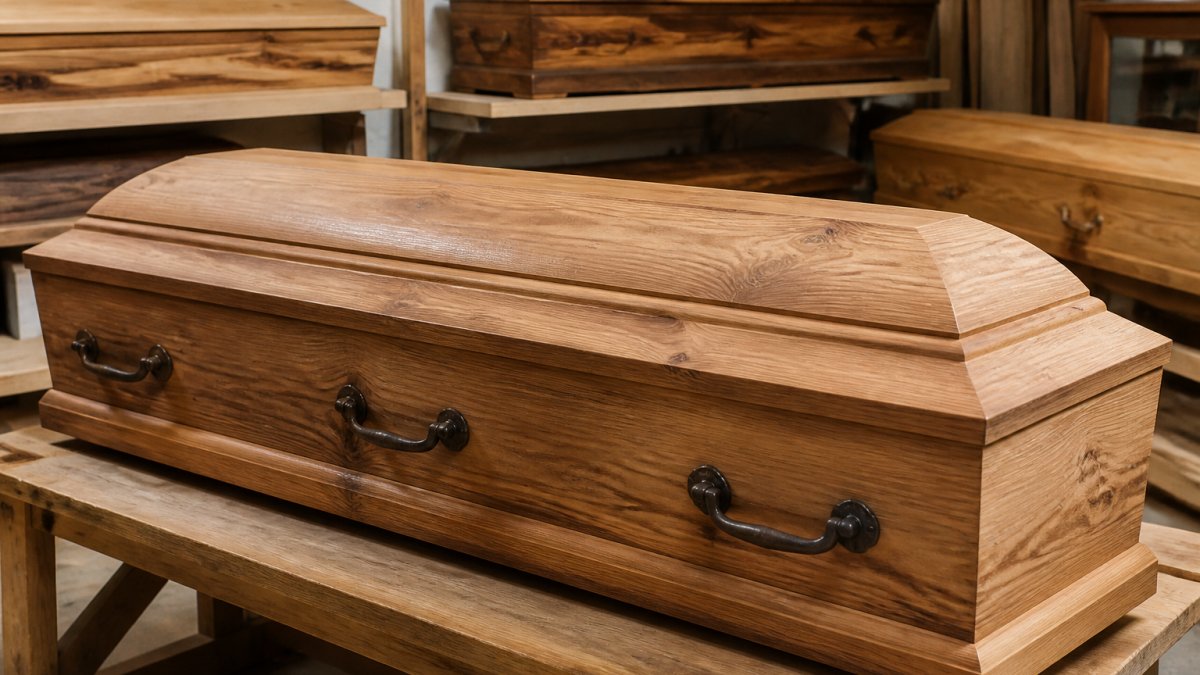
An Amish made casket is built by hand, often without power tools, which is why the joinery, finish, and dimensional accuracy hold up under close inspection. Our independent craftsmen work in small shops, not assembly lines. Each piece is one of a kind.
Hand Tools, Hand Skills, and What That Means for Quality
Hand work changes the product in ways a family can detect. A hand-cut dovetail or mortise-and-tenon joint fits tight because it was cut to that specific board, not to a tolerance band on a machine. Surfaces get planed rather than sanded flat, which leaves the grain open and the figure visible instead of sealed under a heavy factory lacquer. Edges are eased by hand, so the lid and rails feel smooth rather than sharp.
What most guides miss is that hand work also changes the failure modes. Power-tool production tends to fail at fasteners and glue lines under stress. Hand-cut joinery fails slowly, if at all, and rarely in a way anyone sees during a service.

What the Amish Funeral Tradition Teaches About Simplicity
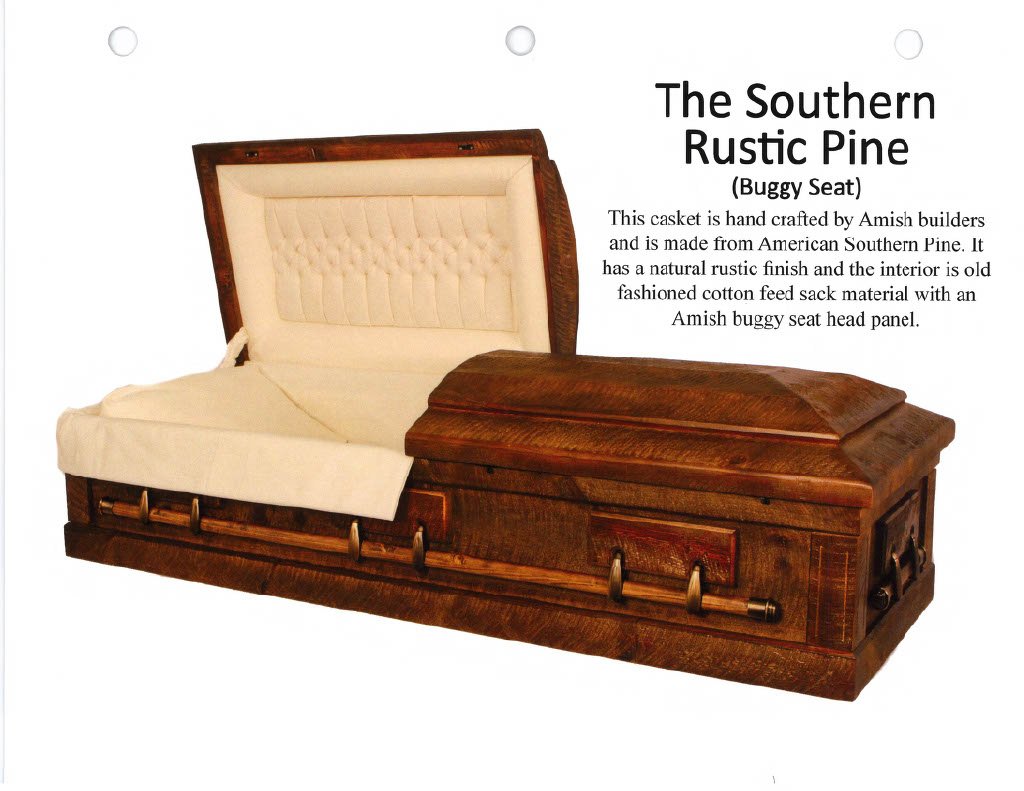
Amish funerals are plain by conviction. The community gathers at home or in a simple meetinghouse, the casket is modest, and the focus stays on the person and the congregation rather than on display. That tradition shapes the product. Our craftsmen build caskets that are dignified without ornament, which is exactly what many families outside the Amish community are now asking for. Simplicity, it turns out, travels well.
Wood Casket Materials: Mahogany, Walnut, Cherry, and Oak
Wood casket materials differ in grain, color, hardness, and how they age, and the choice usually comes down to what a family associates with the person. Four species cover most requests.
Mahogany carries a deep reddish-brown tone and a fine, even grain. It reads formal and traditional, and it takes a hand-rubbed finish beautifully.
Walnut offers a rich chocolate brown with dramatic figure. It is a common choice for families who want warmth without gloss.
Cherry starts lighter and darkens with exposure to light, so the piece deepens over time. Its grain is smooth and understated.
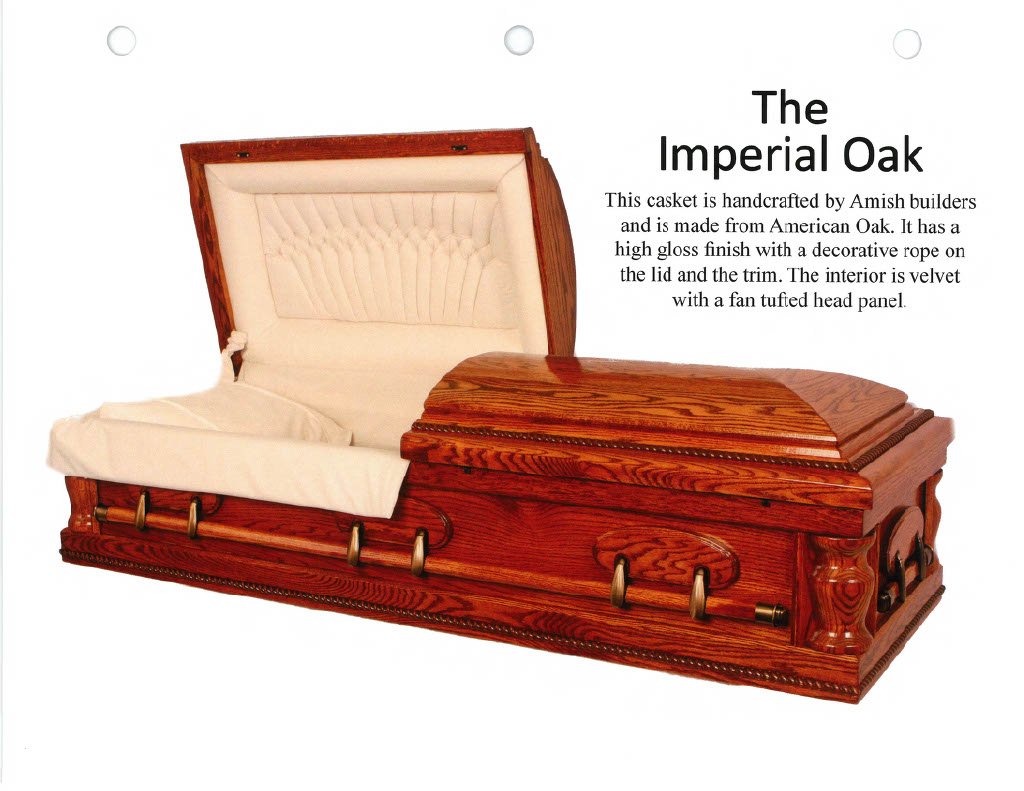
Oak is the most durable of the group, with an open, pronounced grain. It suits families who want a sturdy, plainly beautiful casket.
One practical note for directors: ask for a sample board in the actual finish, not a photograph. Grain and color shift under different lighting, and the arrangement room rarely matches a supplier's catalog shot.
Wood | Grain and Color | Best For | Finish Behavior |
Mahogany | Fine, even; deep reddish-brown | Traditional, formal services | Takes hand-rubbed finish well |
Walnut | Bold figure; rich chocolate brown | Families wanting warmth, less gloss | Shows figure clearly |
Cherry | Smooth, understated; darkens with light | Timeless, understated tributes | Deepens over time |
Oak | Open, pronounced; light to medium | Sturdy, plainly beautiful pieces | Holds up to heavy handling |
Custom Wooden Caskets: What Families Can Request
Custom wooden caskets are more flexible than most directors assume. Because each piece is built individually, a family can specify the wood species, the stain or natural finish, the hardware, and often the interior fabric and lining. Engraving, nameplates, and simple carved details are routine requests.
The honest limitation is time. A fully custom piece takes longer than a standard build, and a Friday request for a Monday service leaves little room for changes. That is why we keep standard designs ready and treat customization as an addition rather than a starting point. If a family wants something unusual, tell us early and we will tell you plainly what is achievable.
Pro Tip Ask for the interior fabric and hardware options at the same time you quote the wood. Families rarely change their mind about the species, but they frequently change the lining once they see it, and a late switch is what pushes a build past the service date.
Wood Casket Cost: What Drives the Price
Wood casket cost depends on the species, the amount of hand work, the interior, the hardware, and the timeline. There is no single number, and any supplier who quotes one without asking about those variables is guessing.
Species is the largest factor. A common wood costs less than a rare one simply because the board costs more. Hand work adds labor, and a fully custom piece adds more. Interior fabric, hardware, and engraving each move the total. Rush timelines can add cost because they rearrange a shop's schedule.
We do not publish fixed prices because the honest answer depends on the build. Contact us with the wood, the interior, and the date, and we will quote it directly.
Choosing a Wooden Casket: A Framework for Funeral Directors
Choosing a wooden casket for your inventory is a supply decision, not just a product decision. Use this framework before you commit.
Step 1: Define the service window. Write down the shortest turnaround you realistically face. If families call on a Friday for a Monday service, your supplier must be able to hit that, and you should test it before you need it.
Step 2: Shortlist species. Pick two or three woods that match the families you serve most. Stocking four species sounds thorough; stocking two that always move is better business.
Step 3: Request physical samples. Ask for finish samples in the actual wood. Compare them under the lighting in your arrangement room.
Step 4: Verify the guarantee in writing. Ask what happens if a casket arrives damaged or does not meet the family's expectations. Get the answer in writing before the first order.
Step 5: Confirm shipping to your location. Ask about delivery to your zip code and how shipping is calculated, because freight can change the math on a small order.
Step 6: Order one before you need one. Place a single casket and inspect it. A sample order tells you more than any catalog.
Watch Out The most common mistake is testing a new supplier during a real service. If the casket arrives late or wrong, the family absorbs the consequence, not the supplier. Place a trial order on a quiet week and inspect it before you put anyone's funeral on the line.
What to Watch For Before You Commit
Two questions separate a reliable supplier from a hopeful one. The first is turnaround: ask for specifics on how a short-notice order is handled, and ask for references from funeral homes already using them. The second is the guarantee: a real one is written, covers damage and unmet expectations, and does not leave the funeral home holding the cost.
Small and rural funeral homes should also settle shipping early. Ask whether delivery reaches your area, how freight is priced, and whether that changes on a single casket versus a larger order. A supplier who answers those questions clearly before you order is usually the one who answers clearly after.
Conclusion
The hardest part of sourcing handcrafted caskets is finding a supplier who delivers on time, stands behind the product, and treats your families with the same care you do. Barnwood Casket builds one-of-a-kind wooden caskets and cremation urns by hand, offers a variety of woods including mahogany, walnut, cherry, and oak, and backs every piece with a guarantee. Get started with Barnwood Casket and give the families you serve a memorial they will remember for the right reasons.
Frequently Asked Questions
What are the benefits of an Amish made casket?
The main Amish made casket benefits are build quality, material selection, and individuality. Most Amish craftsmen work without power tools, so joints are fitted by hand rather than stapled or glued under pressure. That translates to tighter seams, smoother finishes, and a casket that holds its shape through viewing and transport. Families also get wood options like mahogany, walnut, cherry, and oak, plus one-of-a-kind designs that mass-produced caskets cannot match.
What wood casket materials work best for a traditional funeral service?
Mahogany and walnut are the heaviest and most formal of the wood casket materials, and they suit traditional services where the casket is a focal point. Cherry develops a warmer tone over time and works well for families who want something distinctive but not ornate. Oak is the most durable and takes stain evenly, which makes it a practical choice when the service involves open viewing or a long visitation. Availability and finish preference usually decide it.
How much does a wood casket cost, and what drives the price?
Wood casket cost depends on the species of wood, the complexity of the design, the hardware and lining chosen, and whether the piece is a custom build or a standard model. Hand-fitted joinery and one-of-a-kind work add labor, so a custom wooden casket sits above a mass-produced equivalent. Because pricing varies by order, ask your supplier for a current quote based on the specific wood and design the family has in mind.
Can Amish made caskets be customized for a specific family?
Yes, and this is one of the strongest reasons funeral directors keep handcrafted suppliers on their list. Custom wooden caskets can be built in a specific wood species, with a chosen stain, lining, hardware, and sometimes a carved or engraved detail that reflects the deceased. The practical limit is time: a fully custom build needs more lead time than a standard model, so confirm the schedule before promising a date to the family.
CONTACT
Comments