
Casket Price Guide: What You'll Actually Pay in 2026

Table of Contents
How Much Does a Casket Cost? Breaking Down Real Numbers
What Drives the Price Up or Down
Casket Cost by Material: Wood, Metal, and Beyond
Wood Caskets
Metal Caskets
Bronze and Copper Caskets
Casket Price Comparison: Funeral Home vs. Online Retailers
Your Casket Buying Guide: What to Know Before You Purchase
Sizing, Customization, and How They Affect Price
Total Cost of Buying a Casket: Delivery, Taxes, and Funeral Home Fees
The FTC Funeral Rule: What It Requires
Building a Landed-Cost Comparison
A Simple Comparison Method
Coffin vs. Casket: Terminology and Cost Differences
Conclusion: Making an Informed Casket Decision
Frequently Asked Questions
Last Updated: October 13, 2026
How Much Does a Casket Cost? Breaking Down Real Numbers
The casket price you pay depends on three things: material, where you buy it, and how quickly you need it.
Casket price is the total amount a buyer pays for a burial container, including the unit itself, any customization, delivery, and taxes. Most families never see that full figure until the bill arrives.
Below, we'll show you exactly how each factor changes what you pay, where the biggest markups hide, and how to compare quotes fairly. The material categories we cover account for most of the variation families see.
Key Takeaway The single biggest driver of casket price is not size or finish. It's the sales channel. The same casket bought through different routes can vary by hundreds or thousands of dollars.
What Drives the Price Up or Down
Material sets the floor. Hardwoods like mahogany and walnut cost more than pine, and metals range from steel to solid bronze. Interior lining, hardware, and finish add on top.
Where you buy matters just as much. Funeral homes price caskets as part of a service package. Online retailers and direct manufacturers sell the casket alone, often at a lower unit price.
Timing is the wild card. A standard order placed in advance costs less than a rush order needed for a Monday service called in on Friday. Custom sizing and one-of-a-kind designs push the number higher because they take more labor.
Casket Cost by Material: Wood, Metal, and Beyond
Material is the clearest way to sort casket pricing into tiers, and it is also the fastest way to set a realistic budget.
Material | Typical Price Band | What Sets the Price |
Pine, poplar, particleboard | Lowest tier | Simple joinery, basic lining, no sealing features |
Oak, cherry, walnut | Mid to high tier | Solid hardwood, grain grade, hand-finishing, joinery method |
Steel (20-gauge to 18-gauge) | Mid tier | Gauge thickness, paint vs. brushed finish, sealing |
Stainless steel | High tier | Corrosion resistance, heavier stock, premium finish |
Copper | High tier | Solid metal weight, hand-finished surfaces |
Bronze | Highest tier | Solid cast metal, weight, hand-finishing, permanence |
A useful rule of thumb: moving up one material tier commonly adds hundreds of dollars, and moving from the entry tier to solid bronze can multiply the price several times over.

Wood Caskets
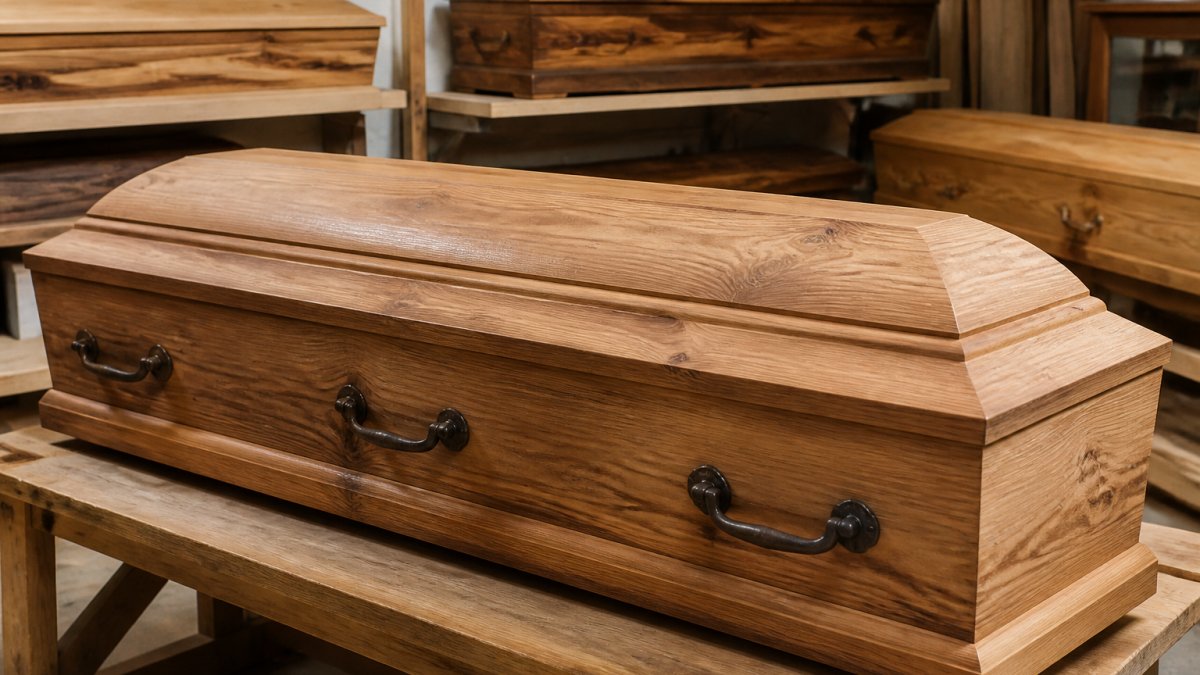
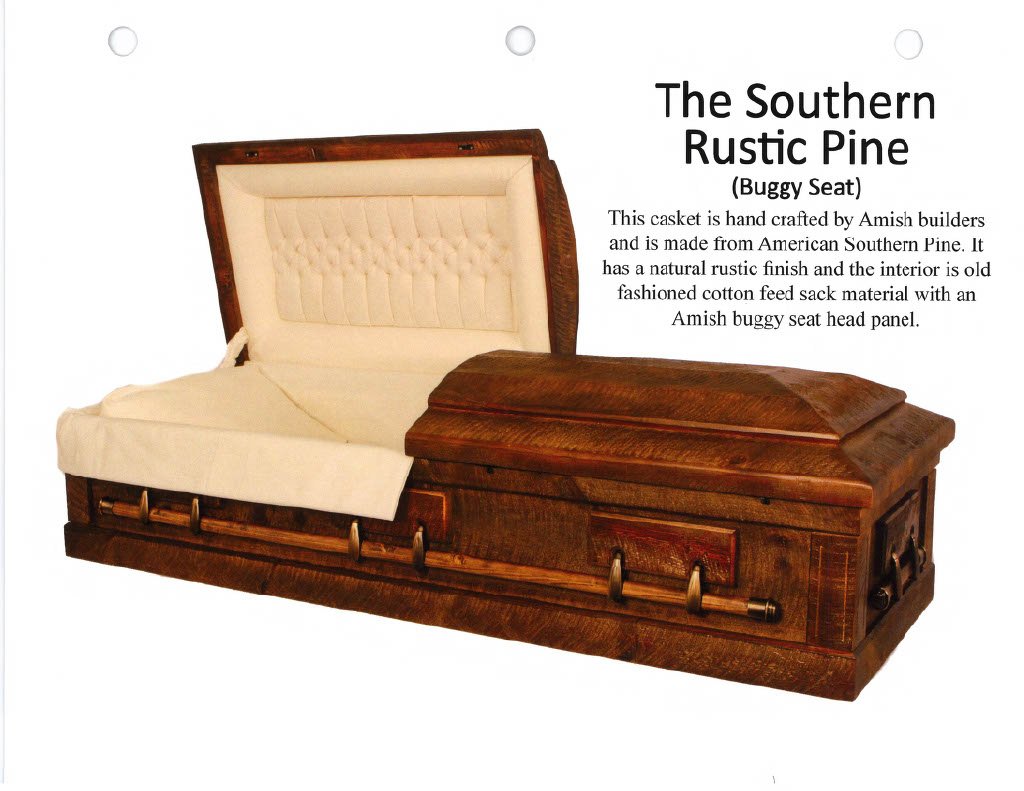
Wood caskets are the most traditional option and usually the most affordable at the entry level. Pine and poplar sit at the low end because the material is plentiful, the joinery is simple, and the lining is basic.
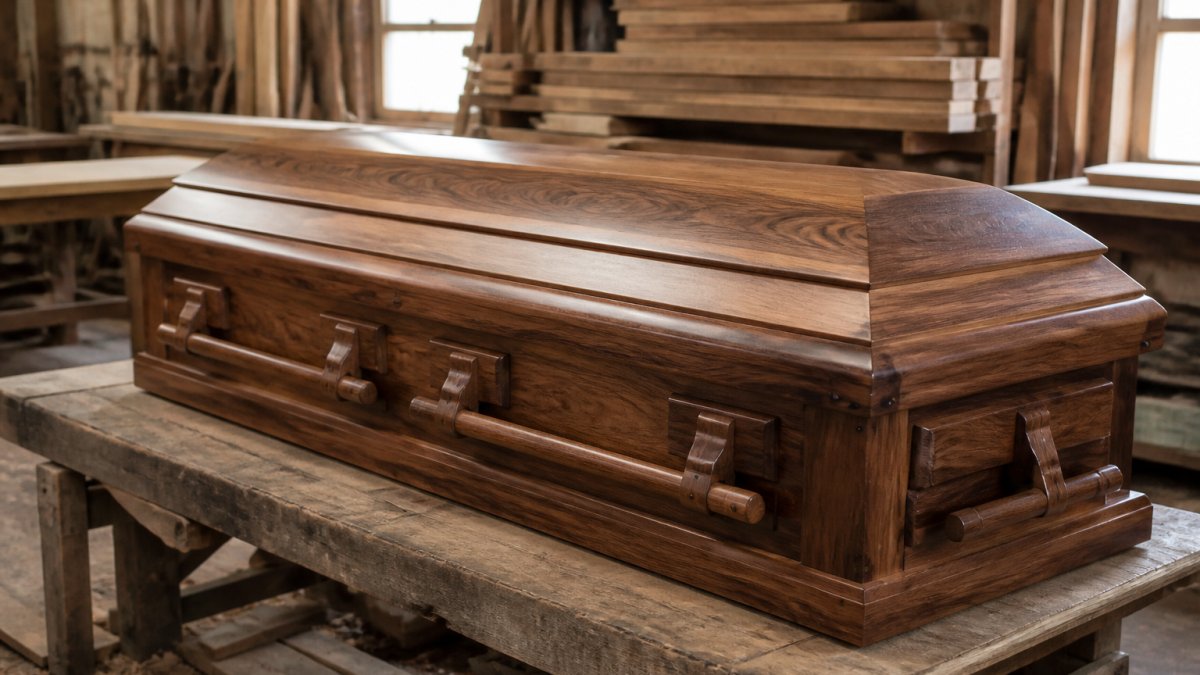
Handcrafted wood caskets built by skilled craftsmen often offer a noticeable difference in fit, finish, and detail. At Barnwood Casket, our Amish craftsmen build one-of-a-kind pieces from mahogany, walnut, cherry, and oak, often without power tools. That labor contributes to the value, and it's the reason many funeral directors offer these pieces as a premium choice.
Metal Caskets
Metal caskets start with steel, which comes in gauges. A lower gauge number means thicker steel and a higher price, so a 20-gauge casket typically costs less than an 18-gauge casket in the same finish. Painted and brushed finishes sit below stainless steel, which adds corrosion resistance and a higher price.
Metal tends to cost more than basic wood because of the manufacturing process. The price climbs with the gauge, the finish, and the sealing features. For families who want a protective, low-maintenance container, metal is the common pick.
Bronze and Copper Caskets
Bronze and copper are often considered top-tier materials. These are solid, heavy, and built to last. A bronze casket can be significantly more costly than a steel model, and copper often sits just below bronze in many lineups.
The price reflects the raw metal, the casting, and the hand-finishing. These caskets are usually chosen for their permanence and appearance rather than cost savings. If budget is the priority, this may not be the tier to shop in.
Key Takeaway Material sets the floor, but it does not set the final price. Two caskets in the same wood or the same gauge can differ by hundreds of dollars once lining, hardware, finish, and seller channel are factored in.
Casket Price Comparison: Funeral Home vs. Online Retailers
The channel you buy through can change the casket price. Funeral homes bundle the casket with services, which can obscure the unit cost. Online retailers and direct manufacturers sell the casket alone, and the unit price can sometimes be lower.
Buying online is legal. Under the FTC Funeral Rule, you have the right to buy a casket from a third party and the funeral home must accept it. The rule also requires funeral homes to give you a written price list, so you can compare before you commit.
Here's what to watch when comparing:
Ask for the casket's unit price separate from service fees
Confirm whether delivery is included or billed separately
Check the return and damage policy before ordering
Verify the seller's lead time for a rush service
Pro Tip When you request a quote, ask for the "casket only" line item. Bundled prices make it nearly impossible to tell whether you're paying more for the casket or for the service.
The trade-off is real. A potentially lower online price can come with shipping costs and a longer lead time. A funeral home price often includes hands-on service and immediate availability. Compare the total, not the sticker.
Your Casket Buying Guide: What to Know Before You Purchase
A smart purchase starts with three questions: what material, what size, and how soon. Answer those first, and the price range narrows fast.
Ask every seller for a written quote that lists the casket, delivery, taxes, and any handling fees. A casket buying guide is only useful if it forces that transparency, because hidden fees are where budgets break.
Sizing, Customization, and How They Affect Price
Standard caskets fit most adults, but oversize and custom sizes cost more. Extra length, width, or depth means more material and more labor.
Customization adds cost in layers. A specific wood, an engraved panel, a particular interior fabric, or a one-of-a-kind design each adds to the base price. Limited-edition and personalized pieces sit at the top because they can't be mass-produced.
If a family wants something outside a standard lineup, ask early. Custom work takes longer, and the lead time affects whether it's ready for the service.
Total Cost of Buying a Casket: Delivery, Taxes, and Funeral Home Fees
The list price is rarely the final number. Delivery, sales tax, and possible funeral home handling fees all add to the total, and the only way to compare two sellers fairly is to build a landed-cost figure that includes every line. This section shows you how to calculate what you will actually pay.
The FTC Funeral Rule: What It Requires
The FTC Funeral Rule is the single most useful consumer protection when you are buying a casket. It requires funeral homes to give you a written, itemized price list before you discuss arrangements, and it requires them to disclose any fee they charge to handle a casket you bought elsewhere. It also gives you the right to buy a casket from a third party, and the funeral home must accept it without requiring you to buy theirs.
Two practical consequences follow from that rule:
You can request the price list by phone or in person, and you do not have to be in the arrangement room to get it.
Any handling fee for a third-party casket must appear on that list. If it is not on the list, ask for it in writing before you commit.
Building a Landed-Cost Comparison
A landed cost is the total you pay to have the casket in the funeral home's possession, ready for the service. Build it line by line:
Cost Component | Usually Included? | What to Confirm |
Casket unit price | Varies by seller | Ask for it separately from service fees |
Delivery | Sometimes | Distance, speed, and whether liftgate or inside delivery is included |
Sales tax | Rarely | State and local rate at the delivery address |
Funeral home handling | Sometimes | Confirm it is on the itemized price list |
Customization | No | Quote before ordering, not after |
Rush or expedited fee | No | Confirm cutoff times for a weekend service |
Delivery varies by distance and speed. A rush shipment costs more than a standard one, and a residential or liftgate delivery can add a fee that a business delivery does not. Sales tax applies in most states, though rules differ, so confirm the rate before you buy.
Funeral home fees are the most misunderstood line. Some homes charge a handling fee to accept a third-party casket, and some do not. The Funeral Rule requires homes to disclose these charges on their price list. Ask for it in writing, and keep the quote with your other paperwork.
Watch Out Skipping the written price list is the most common mistake. Without it, a handling fee or delivery charge can appear at the end and push the total well past your budget. Request the itemized list first, then compare landed costs side by side.
A Simple Comparison Method
Write down the unit price, delivery, tax, handling, and any customization for each seller. Add them. The seller with the lowest sticker price is not always the seller with the lowest landed cost, especially once a handling fee and a rush delivery are included. Comparing landed costs is the only apples-to-apples method.
Coffin vs. Casket: Terminology and Cost Differences
People use "coffin" and "casket" interchangeably, but they are not the same. A casket is a rectangular box with a hinged lid, the standard form in most American funerals.
The shape affects cost. Coffins take different construction and are less common in the mainstream market, so availability and pricing can vary. Caskets are often mass-produced in standard sizes, which can make their prices more predictable.
For most families arranging a traditional burial, a casket is a common choice, and the price range can be easier to compare across sellers.
Conclusion: Making an Informed Casket Decision
The casket price you see is rarely the price you pay. Material, channel, timing, customization, and fees all shape the final number, and comparing fairly often involves demanding written quotes that separate the casket from everything else.
At Barnwood Casket, we've built handcrafted, Amish-made caskets since 2010, and we work exclusively through licensed professional funeral directors. Our caskets come in mahogany, walnut, cherry, oak, cedar, cypress, maple, hickory, pecan, poplar and pine crafted without power tools, and every product is backed by a full guarantee.
Contact Barnwood Casket to request a quote and see how our handcrafted caskets can serve the families you care for.
Frequently Asked Questions
Which is more expensive, a coffin or a casket?
Caskets and coffins can vary in price. A casket is rectangular with a split lid and interior lining, while a coffin is tapered and typically simpler in design. However, pricing depends heavily on material and craftsmanship. A basic wood coffin might cost less than an ornate metal casket, and a custom hardwood casket can be more expensive than a standard coffin.
What factors affect the price of a casket?
Material, craftsmanship, interior lining, hardware, and where you buy all influence casket price. Solid mahogany or bronze can be more expensive than pine or steel. Handcrafted pieces from independent builders can be priced differently than mass-produced options. Buying directly from an online retailer or a manufacturer can sometimes reduce costs compared to purchasing through a funeral home, which may add a markup. Delivery fees and state taxes also affect the final amount.
Are wood caskets more expensive than metal caskets?
It depends on the wood and metal types. A simple pine casket may cost less than a stainless steel model, but a solid mahogany or walnut casket can be more expensive than a standard metal casket. Hardwoods like mahogany, walnut, and cherry are often priced higher due to material cost and craftsmanship time. Metal caskets range widely too, with bronze and copper often at the top of the range and painted steel at the lower end.
Can you buy a casket from a retailer other than a funeral home?
Yes. The FTC Funeral Rule requires funeral homes to accept caskets purchased elsewhere without charging a handling fee, provided the casket meets basic requirements. You can buy from online retailers, independent craftsmen, or directly from manufacturers. Buying outside a funeral home can sometimes offer cost savings, but confirm delivery timelines and return policies. Some suppliers, including Barnwood Casket, work through licensed funeral directors to ensure smooth coordination.
CONTACT
Comments